
ADHD and rewards can be closely connected, especially when a child is expected to stay focused while waiting for something motivating to happen.
If your child seems much more motivated when a reward is immediate but struggles to stay engaged when the payoff is far away, research into the ADHD brain may offer some insight into why.

This post contains affiliate links.
What Did the Study Look At?
Researchers from the Okinawa Institute of Science and Technology, the Federal University of Rio de Janeiro, and the D’Or Institute for Research and Education studied how the brain responds to rewards in people with and without ADHD.
The study involved college students, not children. Participants completed a simple task while inside an fMRI scanner, allowing researchers to examine activity in an area of the brain called the striatum.
The researchers were particularly interested in what happened when participants were waiting for a reward compared with when they actually received it.
What Is the Striatum?
The striatum is a part of the brain involved in processing rewards.
In this experiment, researchers looked at activity in the striatum while participants completed a task in which certain images were associated with the possibility of receiving a reward.
One image was never followed by a reward, while another was followed by a reward 66% of the time.
This allowed researchers to examine how the brain responded to the anticipation of a possible reward and to the reward itself.
What Did Researchers Find?
The researchers observed different patterns of activity in the striatum between participants with and without ADHD.
Among participants without ADHD, the striatum was more active while they were anticipating the reward.
Among participants with ADHD, the opposite pattern was observed. Their striatum showed greater activity when the reward was actually delivered than while they were waiting for it.
The researchers suggested that this difference could help explain why waiting for a future reward may be more difficult for people with ADHD.

Why Might Waiting Be So Difficult?
Think about two different situations.
In the first, you tell your child, “If you finish your homework, you can play a game later tonight.”
In the second, you say, “Finish these three problems and then you can have a short break.”
The second reward is much closer in time.
The research suggests that, for people with ADHD, the brain may respond more strongly to the reward when it actually arrives than to the anticipation of receiving it.
This may help explain why a distant reward doesn’t always provide enough motivation to stay focused on a difficult or less interesting task.
Does This Mean Kids With ADHD Need Constant Rewards?
Not necessarily.
The study did not test reward systems as a parenting strategy, and the participants were college students rather than children.
However, the researchers connected their findings with existing behavioral approaches that use more frequent rewards for children with ADHD. They suggested that understanding the neurobiology behind ADHD may help parents and teachers understand why these approaches can be useful.
So the takeaway isn’t that children should receive a prize every time they complete a task.
Instead, the research provides one possible explanation for why immediate feedback and rewards may sometimes be more motivating than rewards that are far away.
ADHD and Rewards: Why This Matters for Parents
It can be frustrating when a child understands what they are supposed to do but can’t seem to stay motivated long enough to reach a future goal.
Parents may wonder:
“Why can’t they just wait?”
“Why isn’t the promise of something later enough?”
“Why do I have to remind them again?”
The brain’s response to reward may be one piece of the explanation.
The behavior isn’t necessarily about a child simply refusing to cooperate. ADHD can affect the processes involved in attention, motivation and responding to rewards.
Making Goals Feel More Immediate
The research may encourage parents and teachers to think about how far away a reward or positive feedback feels.
For example, instead of making the goal:
“Finish all of your homework and then you can play.”
You might break a larger task into smaller pieces and provide positive feedback along the way.
The idea is to make progress and its consequences more immediate.
This isn’t about rewarding “bad behavior.” It’s about recognizing that motivation can work differently for someone with ADHD.
Rewards Can Be More Than Things
A reward doesn’t necessarily have to mean buying something or giving a child a physical prize.
Positive feedback, a short break, time doing a preferred activity, or another meaningful consequence can provide motivation.
What works will vary from child to child.
The important point is that a goal that feels very far away may be harder to use as motivation than something that happens sooner.
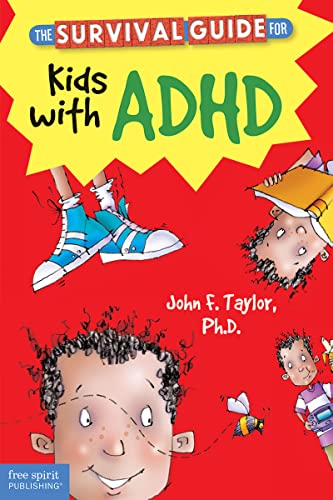
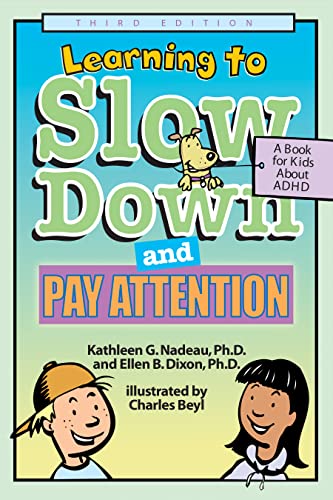
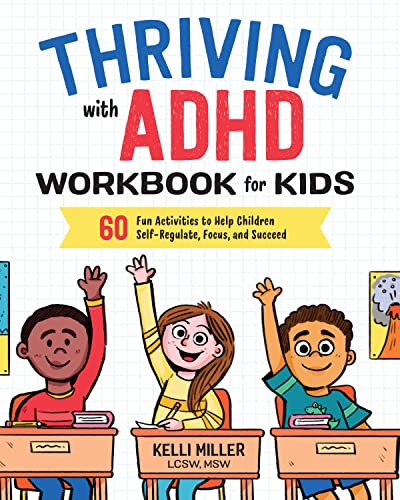
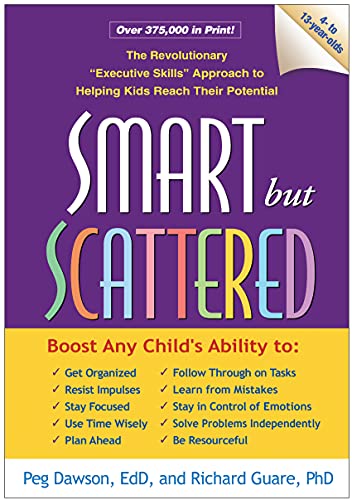
The Survival Guide for Kids with ADHD (Survival Guides for Kids) Learning To Slow Down & Pay Attention: A Book for Kids About ADHDThriving with ADHD Workbook for Kids: 60 Fun Activities to Help Children Self-Regulate, Focus, and SucceedSmart but Scattered: The Revolutionary
A Reminder About the Study
It’s important not to overinterpret these findings.
The study involved college students with and without ADHD, even though the researchers were interested in understanding ADHD and its effects on everyday behavior in children and beyond.
The study also examined brain activity during a specific experimental task. It does not mean that every child with ADHD has the same brain response or that rewards are the only reason a child has difficulty focusing.
ADHD is much more complicated than a single brain region or reward response.
Why Understanding the Brain Can Change the Conversation
One of the goals described by the researchers was to better understand what happens in the brains of people with ADHD and how those processes may relate to everyday behavior.
That kind of information can also change how adults think about behavior.
Instead of seeing a child who struggles to stay focused as simply unmotivated or unwilling to cooperate, we can ask whether the way the task is structured is making it especially difficult for that child to stay engaged.
Understanding the possible reasons behind a behavior doesn’t mean removing expectations. It can help us find more effective ways to support children in meeting them.
Final Thoughts on ADHD and Rewards
ADHD and rewards may be connected in ways that aren’t always obvious from the outside. This study found different patterns of activity in the striatum during reward anticipation and reward delivery among college students with and without ADHD, suggesting that waiting for a future reward may work differently for people with ADHD.
The study doesn’t provide a simple answer for every child, but it does offer parents another way to think about motivation.
Sometimes, making the goal feel closer, more immediate and easier to see may help a child stay engaged.
And understanding that possibility can replace some of the frustration with a little more curiosity: What can we change about the task to help this child succeed?
To read more about parenting a child with ADHD:
What Your ADHD Child Wishes You Knew: Working Together to Empower Kids for Success in School and Life Taking Charge of ADHD: The Complete, Authoritative Guide for ParentsParenting Kids With ADHD: A Beginner’s Guide to Help your Child Self-regulate, Focus, and Understand their SuperPower.ADHD 2.0: New Science and Essential Strategies for Thriving with Distraction – from Childhood Through Adulthood




Materials provided by Okinawa Institute of Science and Technology (OIST) Graduate University.
Don't Be Shy. Leave a Reply