
How ADHD medication works may be different from what scientists have long believed, with new brain-imaging research suggesting that stimulant medications may improve attention by increasing alertness and making tasks feel more rewarding rather than directly activating the brain’s attention networks.

This post contains affiliate links.
The Key Finding: ADHD Stimulants May Wake Up the Brain
For decades, researchers have thought that stimulant medications such as Ritalin and Adderall primarily worked by directly influencing brain networks responsible for attention.
This new study challenges that explanation.
Researchers found that stimulant medications appeared to act primarily on brain systems involved in arousal, wakefulness, and reward—not the brain networks traditionally associated with attention.
That could help explain why a child taking an ADHD stimulant may suddenly find it easier to stick with a boring, repetitive, or challenging task.
Rather than simply making the brain “pay attention,” the medication may make the task feel more engaging while helping the child stay alert enough to continue.
What Did Researchers Study?
Researchers analyzed resting-state functional MRI scans from 5,795 children ages 8 to 11 who participated in the Adolescent Brain Cognitive Development (ABCD) Study. They compared children who had taken prescription stimulant medication on the day of their brain scan with children who had not.
Children who had taken stimulants showed stronger activity in brain regions associated with arousal and wakefulness, as well as regions involved in predicting how rewarding an activity might be.
The scans did not show notable increases in the brain regions classically associated with attention.
The Researchers Tested the Finding in Adults Too
The team also conducted a smaller experiment involving five healthy adults without ADHD who did not normally take stimulant medication.
Participants had resting-state fMRI scans before and after taking a stimulant dose.
Once again, the medication activated reward and arousal networks rather than attention networks.
This additional experiment gave researchers another way to observe how stimulants change brain connectivity.

Why Would Making Something Feel More Rewarding Help With Attention?
Think about a task that is difficult to stay interested in.
A child may be capable of doing the work but struggle to remain engaged because the activity isn’t rewarding enough to hold their attention.
According to the researchers’ interpretation, stimulants may increase the brain’s sense of alertness and reward, making it easier to stay engaged with something that would normally be difficult to tolerate.
In this model, better attention becomes a secondary effect of increased alertness and engagement.
This could also help explain why some children become less physically restless while taking stimulant medication. If an activity becomes easier to engage with, there may be less need to get up, move around, or look for something more interesting.
Sleep Was an Important Part of the Findings
The study also uncovered an intriguing connection between stimulant medication and sleep deprivation.
The researchers found that stimulants produced brain activity patterns that resembled some of the changes associated with getting a good night’s sleep. In children who were sleeping less than the recommended amount, stimulant use was associated with better grades and cognitive performance compared with sleep-deprived children who were not taking stimulants.
However, this does not mean medication can replace sleep.
The researchers specifically cautioned that children who don’t get enough sleep may experience problems that look like ADHD, including difficulty paying attention and declining school performance.
Could Poor Sleep Sometimes Look Like ADHD?
This is one of the most important reasons the researchers say sleep deserves attention during ADHD evaluations.
Children who are chronically sleep deprived can have difficulty concentrating and staying alert. Those symptoms can overlap with ADHD.
The researchers caution that stimulant medication might improve performance in a sleep-deprived child by producing some brain effects that resemble adequate sleep, while the underlying sleep deprivation remains.
That doesn’t mean ADHD diagnoses are caused by poor sleep. Instead, the findings highlight why sleep quality should be considered when evaluating a child’s attention and behavior.
What Does This Mean for Parents?
The study doesn’t mean that ADHD medications “don’t work.” In fact, the researchers found that children with ADHD who were taking stimulants had higher parent-reported school grades and better performance on cognitive tests than children with ADHD who were not taking stimulants. The greatest improvements occurred among children with more severe ADHD symptoms.
Instead, the research offers a potentially different explanation for how those benefits happen.
If stimulants increase alertness and reward processing, improved attention may happen because the child is more engaged and able to stay with the task.
That’s an important distinction because it changes how scientists think about the brain mechanisms involved in ADHD treatment.
What We Still Don’t Know
This study provides important clues, but it doesn’t answer every question about ADHD medication.
The researchers say more work is needed to understand the long-term effects of stimulant medications on the brain. They also point out that stimulant medication could potentially have different effects depending on factors such as sleep.
And because the main child analysis compared brain scans from children who were taking stimulants with those who were not, the findings should not be interpreted as proving exactly how medication works for every individual child.
The Bottom Line
The biggest takeaway is that ADHD stimulants may improve attention indirectly by increasing alertness and making activities feel more rewarding, rather than by directly activating the brain’s attention networks.
The findings also emphasize an important reminder for parents and clinicians: sleep matters. A tired child can have attention and performance problems that resemble ADHD, and medication should not be viewed as a substitute for adequate sleep.
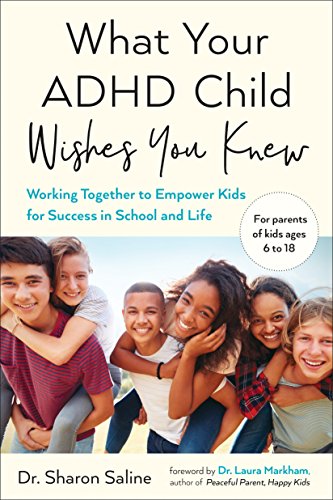
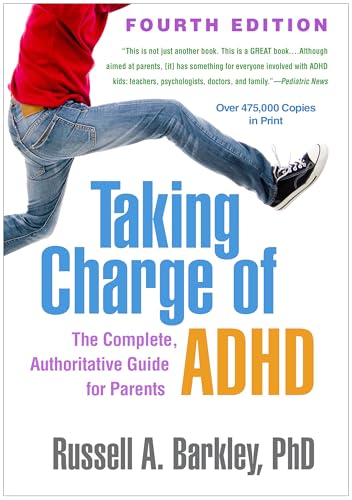
To read more about parenting a child with ADHD:
What Your ADHD Child Wishes You Knew: Working Together to Empower Kids for Success in School and Life Taking Charge of ADHD: The Complete, Authoritative Guide for ParentsParenting Kids With ADHD: A Beginner’s Guide to Help your Child Self-regulate, Focus, and Understand their SuperPower.ADHD 2.0: New Science and Essential Strategies for Thriving with Distraction – from Childhood Through Adulthood


Materials provided by Washington University in St. Louis.
Don't Be Shy. Leave a Reply