
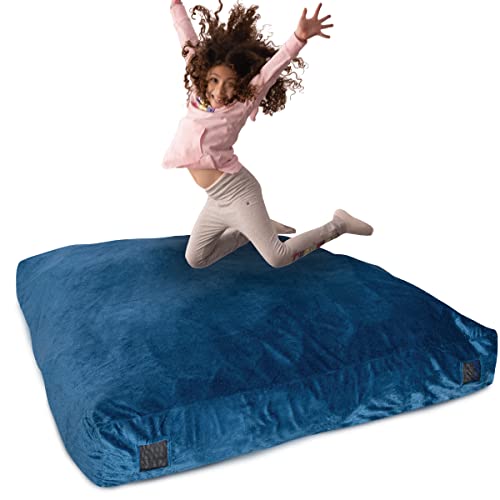
A crash pad can give children a comfortable place to jump, land, roll and explore movement while providing opportunities for sensory-rich play.
The Skil-Care Crash Pad is a high-density foam mat designed for children who enjoy active movement, making it worth considering for home sensory spaces, school settings and occupational therapy environments.
This post contains affiliate links.

What Is the Skil-Care Crash Pad?
The Skil-Care Crash Pad is a foam crash mat designed to provide a cushioned surface for movement activities. It features high-density foam and a nylon cover, creating a dedicated space for children to engage in supervised jumping, landing and other gross motor activities.
Crash pads are often used in sensory spaces to give children an appropriate place for active play. They can be especially appealing to children who enjoy jumping onto soft surfaces, rolling or exploring different body positions.
Why It Stands Out
One of the main advantages of a crash pad is its versatility. Rather than serving a single purpose, it can become part of a variety of movement activities based on a child’s interests and abilities.
The high-density foam provides cushioning, while the nylon cover offers a practical surface for regular use. The pad can also become a designated area for movement, helping families and educators create a more intentional space for active play.
Why Parents Will Love It
For parents of active children, a crash pad can offer another way to encourage movement indoors. Children can use it as part of supervised jumping games, pretend play or gross motor obstacle courses.
It can also help create a dedicated movement area at home, particularly when outdoor play isn’t possible. Having a consistent place for active play may make it easier to incorporate movement into daily routines.
Why Teachers Can Use It in the Classroom
Teachers can consider a crash pad for an appropriately equipped gross motor area or sensory room. It can be incorporated into supervised movement activities, indoor obstacle courses and structured play sessions.
The pad can also provide opportunities for children to explore different movement patterns while practicing body awareness and motor planning. In classrooms, clear rules and adult supervision are important to help children use the equipment safely.
Why Occupational Therapists May Find It Useful
Occupational therapists may incorporate crash pads into activities that address gross motor development, body awareness and motor planning. The cushioned surface provides a different movement environment from a standard classroom floor.
Depending on the child’s goals, a therapist might incorporate stepping, crawling, rolling or carefully graded jumping activities. These activities can provide opportunities to practice movement coordination and body positioning.
Crash pads may also be useful when exploring sensory preferences. Some children actively seek jumping and landing experiences, while others may prefer gentler movement or simply enjoy relaxing on a soft surface.
Sensory Benefits of Crash Pad Play
- Proprioception: Jumping, landing and pushing against a cushioned surface involve muscles and joints, providing proprioceptive feedback that helps the body understand its position and movement.
- Body awareness: Moving across or into a crash pad encourages children to adjust their bodies and explore different positions.
- Motor planning: Children can practice planning and coordinating movements during simple obstacle courses and supervised gross motor games.
- Active play: A crash pad provides opportunities to incorporate movement into play rather than relying entirely on seated activities.
Sensory responses vary from child to child, so it is helpful to observe whether a particular activity supports the child’s comfort and participation.
Fun Ways to Use a Crash Pad
Jump and Land: Create a supervised movement activity in which children jump from a low, stable starting position onto the pad, following appropriate safety guidelines.
- Obstacle Course: Combine the crash pad with floor markers, tunnels or stepping stones to create a gross motor course.
- Animal Movements: Encourage children to crawl, bear-walk or move like different animals around the pad.
- Roll and Explore: Invite children to roll across the surface or change positions while exploring comfortable movement patterns.
- Pretend Play: Turn the crash pad into a soft island, a mountain to explore or a landing zone for imaginary adventures.
Things to Consider Before Buying
- Available Space: Make sure the crash pad fits comfortably in the intended area, with enough clear space around it for safe movement.
- Supervision: A crash pad is not a substitute for playground safety equipment. Avoid elevated jumps, collisions and activities that could cause a child to land on their head or neck.
- Product Care: Check the manufacturer’s instructions for cleaning, cover maintenance and inspection.
- Individual Needs: Consider the child’s size, movement abilities and sensory preferences when deciding whether a crash pad is appropriate. An occupational therapist can help determine how to incorporate it into an individualized activity plan.
- Intended Use: Check the manufacturer’s specifications for the exact model, including dimensions, weight limits and recommended activities, before using it for jumping or landing.
Final Thoughts
The Skil-Care Crash Pad offers a dedicated cushioned space for active play and gross motor exploration.
For parents, teachers and occupational therapists, it may be a useful addition to a supervised movement area where children can practice coordination, body awareness and motor planning through play.
Skil-Care 3 Foot x 4 Foot Sensory Foam Crash Pad w/Easy to Clean Nylon Cover for Kids and Adults, Ideal for Sensory Rooms, Classrooms, and Home Milliard Crash Pad Sensory Pad with Foam Blocks for Kids and Adults with Washable Cover

Recommended Reading

Don't Be Shy. Leave a Reply